
Exploring the largest sand island in the world
K’gari is a holiday destination well known for it’s 4WD tracks and beautiful beach highways with prime fishing spots. So we decide to give it a shot, with a total of 9 days on the island we truly embraced the Fraser’s way of life.
We started our adventure on Fraser via Hervey Bay Ferry going out of River Heads, (one of the two ferry’s you take to get onto the island) and loaded up our 4wd’s. (keep in mind you either need your own 4wd or to hire one or to go on a tour, there is no way you are getting your city all-wheeldriver even on the ferry, let alone on the sand! This includes camper trailers, dont even think about it). We took the 45 min, large barge ferry from Hervey Bay to Fraser, now referred to as K’gari, the Indigenous name for the island.
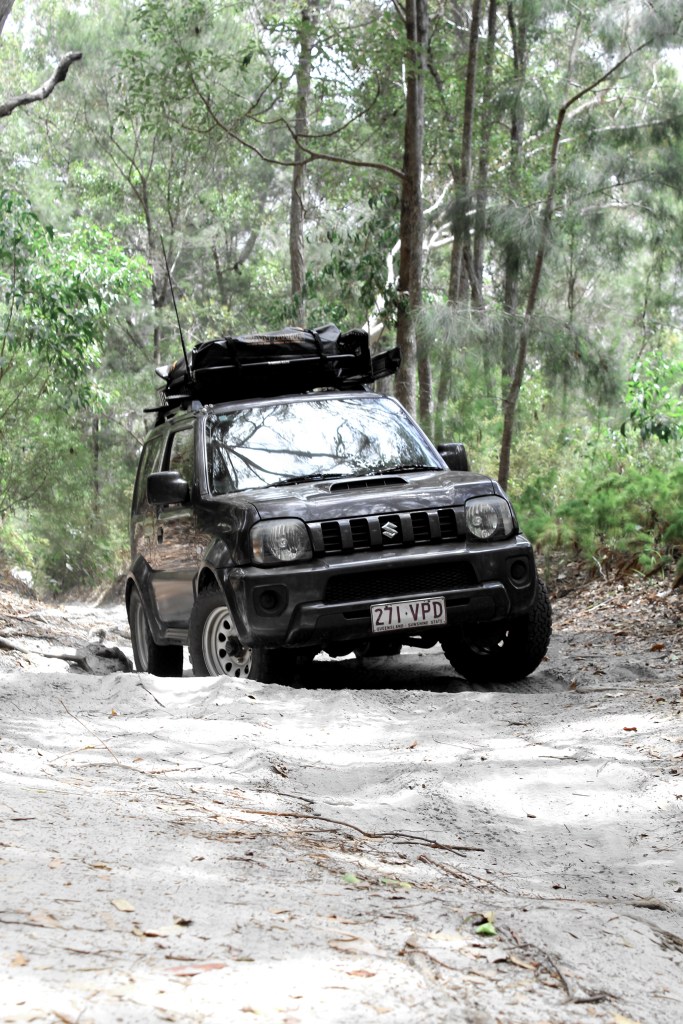
As you leave the ferry your tires are instantly greeted by sand. Rolling sand dunes, over rough forest roots and rushing fresh water rivers, it is 4wdriving heaven! This island is part of the Great Sandy National Park and is surrounded by water, just off the mainland. The island is considered to be the largest sand island in the world at 1,840 square kilometres (710 sq mi) and is also Queensland’s largest island. The entire island is made of sand and everything grows out of it. Rain forests, eucalyptus woodlands, mangrove forests and peat swamps, sand dunes and long coastal beaches with crystal clear waters. The development of rain forest vegetation on coastal dune system at the scale found on K’gari (Fraser Island) is completely unique!
Now, if you decide to travel to K’gari, make sure you are prepared. It isn’t an easy place to visit, you need to do your research. Check out the National parks, Government websites, read into ferry options, search for main camping zones and varying amenities access areas. Fraser isn’t made up of roads and direct routes, it is a maze of sand tracks that cascade over the island. Make sure you are equipped with recovery pads, tow bar, tire deflator/ inflator, a shovel and a mate that will help get you out of any tight spots. Bogging 4wds is common and if you do get stuck and can’t get out, make sure you flag down another 4wd enthusiast that might be on the road to help. The last thing you want is to be hiking back to camp in the dark with no car and dingoes everywhere. Fraser Island can be tricky and if you dont prepare yourself it could end in disaster.


On that joyful note, back to our story. We reached our first camp at Central Station. Like the name describes, located in the center of the island, It is easy to access, dingo safe (meaning there are electric fences surrounding the camp so you can freely cook at night time) and has a hot water shower for a small fee. Surrounded by tall shading trees and winding tracks. It is a perfect spot to drive around the sand and mud dirt roads and visit the surround lakes, while still having a tree sheltered place to leave your camp/tent.
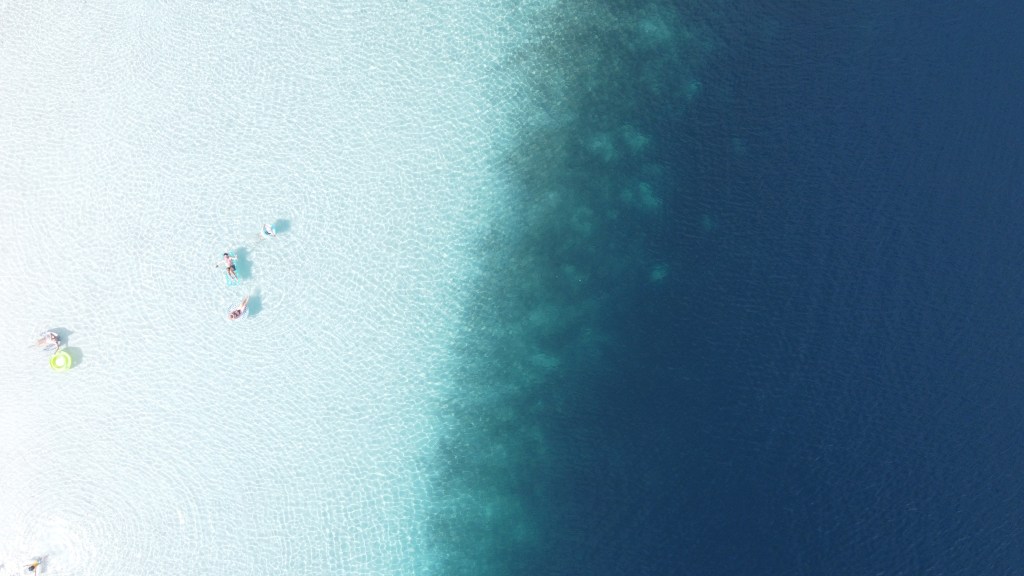
After setting up camp and a few hours of practicing our off road driving skills, we made our way to the first destination, Lake McKenzie. It is probably the highlight of our time there. With a sandy beach so white you need to be wearing sunglasses to look around and for the turquoise water, that turns into a deep mesmerizing blue the deeper it gets, dropping away from the shore. For a few seconds you feel like you are in paradise looking out onto the lake but with kids yelling and running around, its a major reminder not to visit Fraser during the school holidays.
Lake McKenzie is a ‘perched’ lake, which means it contains only rainwater, no groundwater, is not fed by streams and does not flow to the ocean. The sand and organic matter at the base of the lake form an impervious layer, preventing rainwater from draining away. The incredibly pure waters are ideal for swimming. Not only are there no creatures to dodge, but the soft sand underfoot makes it an incredibly peaceful experience. Due to its very high acidity levels in the water this makes it very difficult for anything of organic matter to survive. Lake McKenzie is really beautiful, its vibrant colours, perfect sand and crystal clear waters make for a great day out.

After a few nights at Central and after an exhausting amount of visits to Lake McKenzie, we went north to our second campsite, Cathedral Beach. A few minutes off the beach front and very sheltered from the wind and waves. Not dingo safe, meaning it is in the open and there aren’t any fences keeping you in and the dingoes out. This is common for the beach camps, there isn’t anything to be afraid of, just be smart and lock away food at night. We spent a couple of nights there, going out for day drives, going fishing at the beach and hanging out around the campfire. It was chill.
Then we were off to our third camp, Orchid beach. Along the way we visited Indian Heads and the Champagne pool, which got it’s name from being over run with people swimming in it, so much so that it creates theses, kind of bubbles everywhere… No, just kidding, its actually fizzy from the oceans surf crashing over its rocky edge and fills up the pools.
The sand ramp from the beach to the Champagne pool’s parking area seems to be a great place to show off your big v8 diesel cruiser, judging by the amount of people hooning down the sand like they were running away from the devil itself. A perfect display of toxic muscle car masculinity that is displayed here in the 4wd scene thoughout Australia and they love it. Roaring engines, burnouts and even getting yourself stuck in the sand and having to get your mate to tow you out, its all a highlight for these petrol heads.
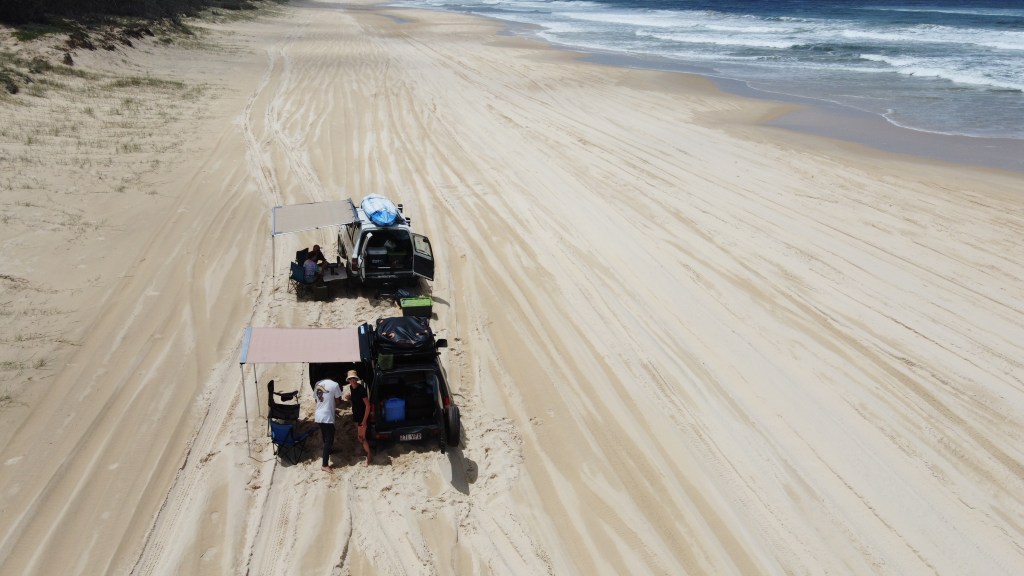
Okay, back to Orchid beach, which we stayed at for 3 days and is without a doubt, one of the most amazing camp on the island with a beach front view and only a couple of hundred meters to walk to throw your fishing rode into the ocean. Be careful if you go swimming as the beach is often covered in jellies and as the water gets warmer, we would definitely recommend a sting suit if you choose to adventure into this ocean. Lake swimming is the safer option of Fraser. Ocean swimming is risky and full of dangers like sting rays, sharks, crocodiles and jelly fish. We try our luck at fishing without much success, even the dingo’s hanging around the beach didn’t seem very impress with our attempts to catch a fish and after a lot of broken lines and lost fish we decide to retire the rod.
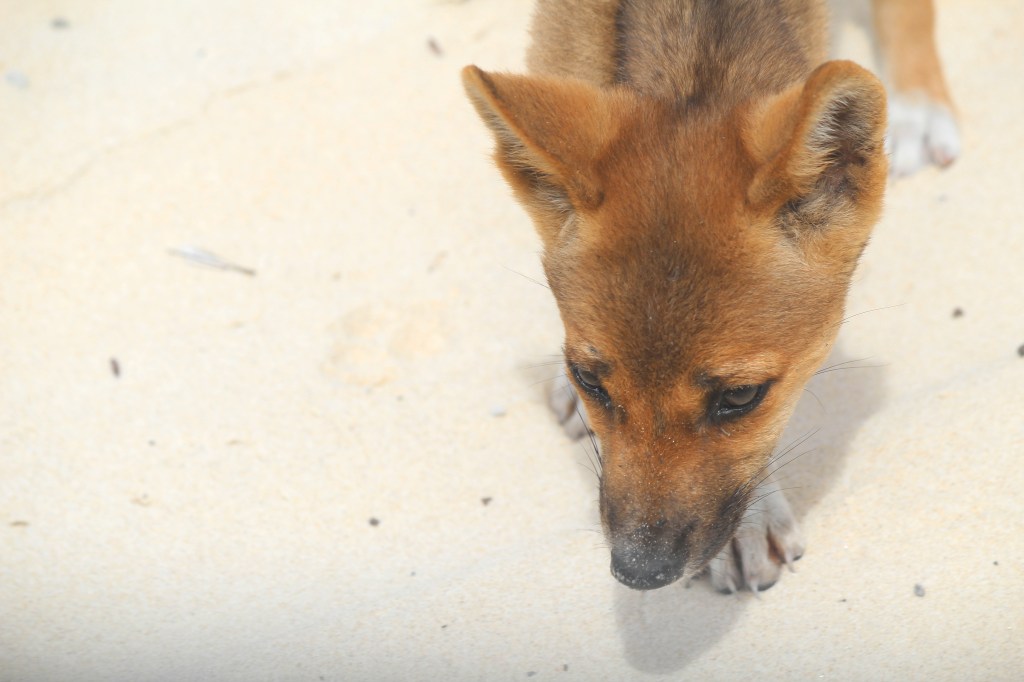
Dingoes roam their island home freely and generally move in packs. They are protected and due to the remoteness of the island, they are slowly becoming the purest strain of dingo in Australia. As a visitor we need to remember to leave the dingoes alone as much as possible. Never feed them, they come into camps to feast on the left overs and scraps that campers leave behind, eating and scavenging our food is what encourages bad behavior. Dingoes become more confident and that can be dangerous for us and them. The best thing to do is keep your distance and observe them from a far, they are wild and we want them to stay that way. At night, pack up all food, lock up your chilly bin (or Esky for you Australian’s out there), clean up rubbish and leave your camp tidy if you want to avoid a late night dingo raid.
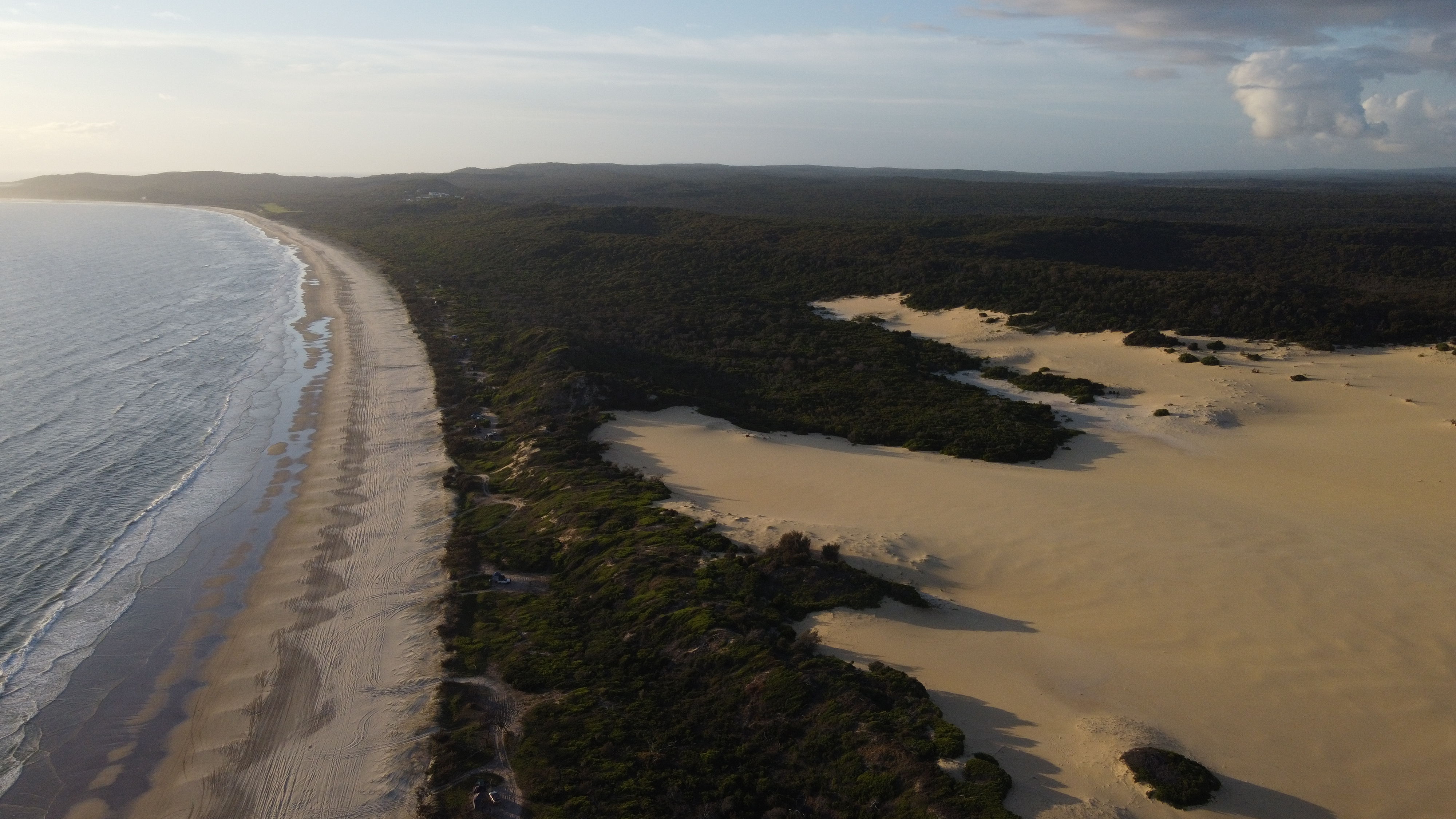
On our 8th day we went for a walk in a sand dune, this is an epic experience special to Fraser Island that you can’t miss. The beauty of the sandy landscape is revealed as you walk into an untouched sand dune where drops and hills are spreading to the horizon without an end. It’s a lot of fun to run and jump around theses sand dunes when the sun is hiding and the heat is supportable. After a fair few jumps and a lot of sand in your undies, you might be rewarded by a nice bush walk revealing a beautiful and luxurious vegetation unique to the Island. The ever changing landscape makes for a beautiful backdrop as we wander the bush paths back to camp.
On our last day we drove all the way down to Hook Point (on the south end of the island, close to Rainbow beach) to catch the ferry back to Inskip Point on the mainland. It is a very quick drive via the beach, smooth sand allows you to get up to speeds of 80kms and is a fantastic beach highway if you need to travel the whole length of the island. Make sure you check the tide levels on the last part near the ferry, on your trip as it get pretty narrow approaching high tide and you dont want to get stuck on the beach with an incoming tide, it will be bye-bye car and hello police fine, if they can catch you that is.
We stayed there, at the bottom of the island for a night, Cooloolio Creek campground is perfect after a week on the coast facing the ocean and the wind. A lot more sheltered it offers a beautiful campsites surrounded with palm trees, private beach covered during high tide and an old broken jetty. You can easily spot dolphins from there and spend some relaxing time sipping wine with your feet in the water away from the wind, the waves and the people. yip, that’s right, its proberly the quietest camp on the island. Visitors jump on at the barge after speeding down the beach and never seem to stay here making it a great quiet night on Fraser.

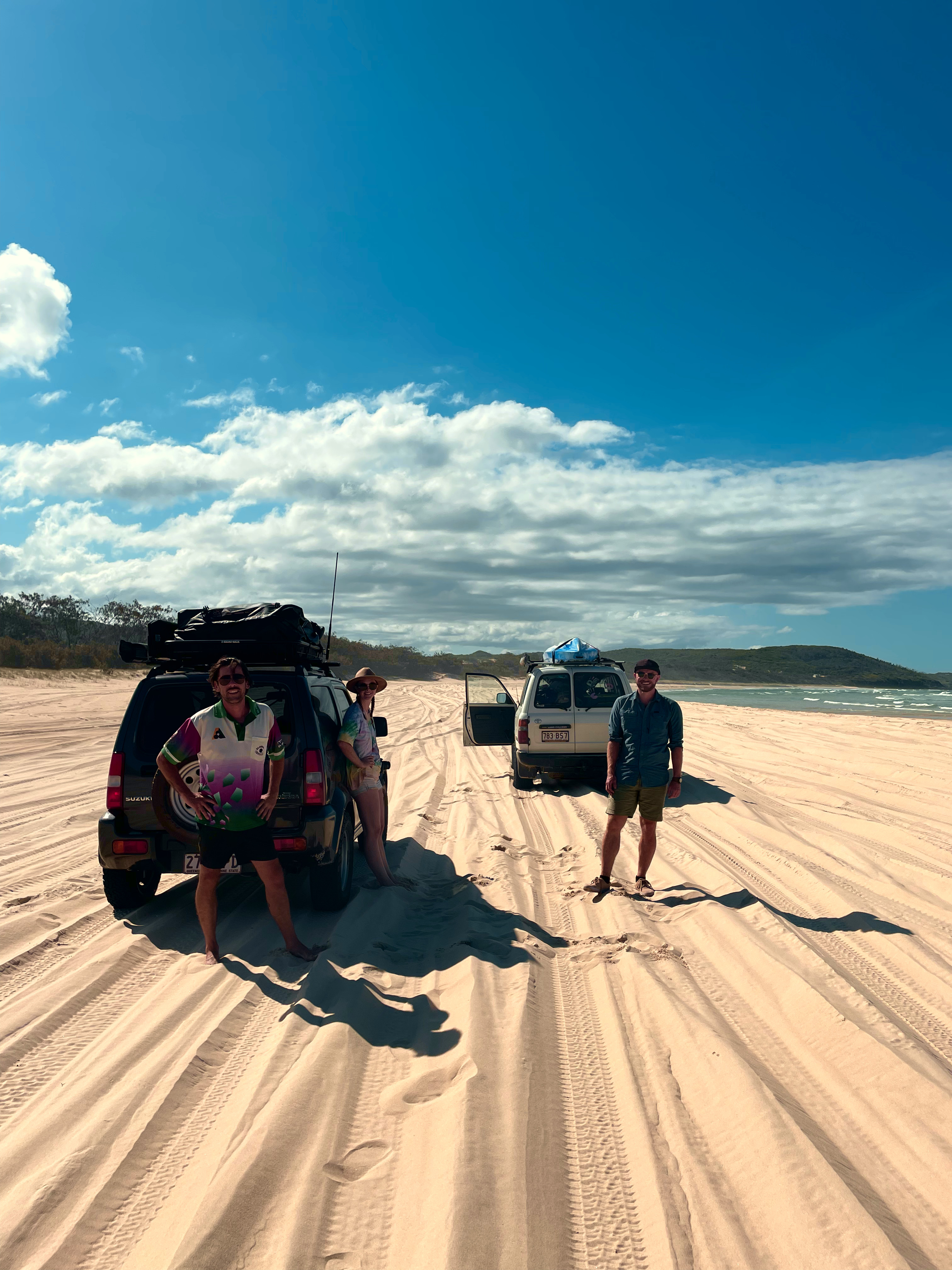
Beach driving is definitely a must do at least once in a lifetime. It is a lot of fun and also a great way to get to know your vehicle. It is very popular in Australia due to its vast size and beautiful dessert landscapes. On our last morning, we woke up, packed up camp and drove from the beach straight on to a Manta Ray ferry and back to Inskip point in Rainbow beach. Just like that, we were back on the mainland.
Fraser island is truly a “must do” if you are ever in Queensland. It was a fantastic experience exceptional natural beauty with over 250 kilometres of clear sandy beaches with long, uninterrupted sweeps of ocean beach, strikingly coloured sand cliffs, and spectacular blowouts. It really helped grow our confidence when driving off road or on a beach. I would encourage anyone to go give Fraser island a go and we can’t wait to go back!
Right, here is some information that might help if your thinking of going to Fraser island,
Ferry options: Rough price guide – don’t get shitty with us if they slightly change, ok? This is what it was when we travelled there…
- Sealink K’gari – in and out of Kingfisher bay (mid island) and roughly $230 return/$140 one way (peak time)
- Manta Ray Barge – in and out of Hook point (bottom of island) roughly $135 return/$95 one way
Important:
- Vehicle access permits are required for all vehicles entering the island. Find online at the QPSW website (Queensland National Parks).
- Camping Permits are also required in advance for camping, you can get them from QPSW too.
- Have a UHF / two-way radio to contact other drivers or the emergency station if needed.
- Bring food, drinks and anything else you might want to enjoy while on the island, the local shops are expensive due to their remote locations. Any item you deem necessary to live, as there isn’t much available in the few tiny supermarkets that are scattered across the island. Make sure you bring what you need! That goes for all your alcohol and cigarettes.
- And lastly, a buddy! Grab that friend! it’s not really the grand experience you want, if you go by yourself.
Things to do in Fraser Island:
- Lake Mckenzie: Take a dip into the pristine waters of Lake McKenzie, where the sand is so white you need sunnys to be able to see anything. Let the crystal-clear waters rejuvenate your senses as you float in a state of pure bliss. It’s not just a lake; it’s a liquid meditation session that makes your troubles disappear faster than a tourist’s hat in a gusty wind.
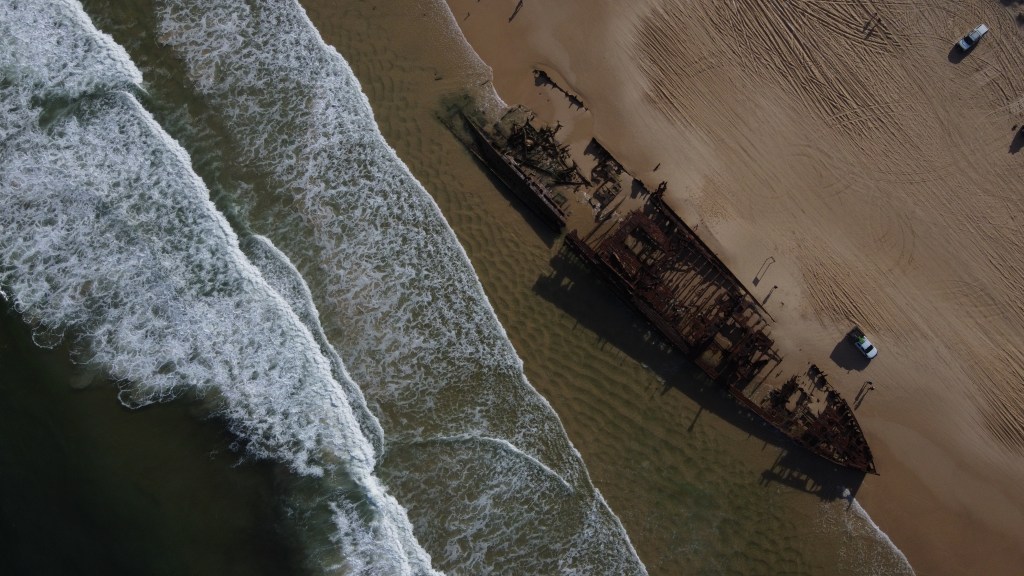
- Shipwreck: Dive into the cool waters around the Maheno Shipwreck for a snorkeling adventure that’s equal parts maritime history and potential dingo lifeguard training. Who needs a crowded aquarium when you can explore the aquatic world surrounded by rusty ship parts and curious dingoes keeping watch from the shore?
- Climb a Sand Dune: This is for sure one of the best thing to do on the island, taking a stroll through the dunes and pretend you’re crossing the Sahara desert, nothing like it! And if you climb high enough you might get the perfect view for sunset.
- Go Fishing: With kilometers of beaches and small reefs, this is a fisherman’s paradise. Whether you’re angling for the catch of the day or just enjoying the salty breeze, Fraser’s fishing scene is a liquid chapter in the island’s adventurous narrative.

 Greetings from
Leave a comment