
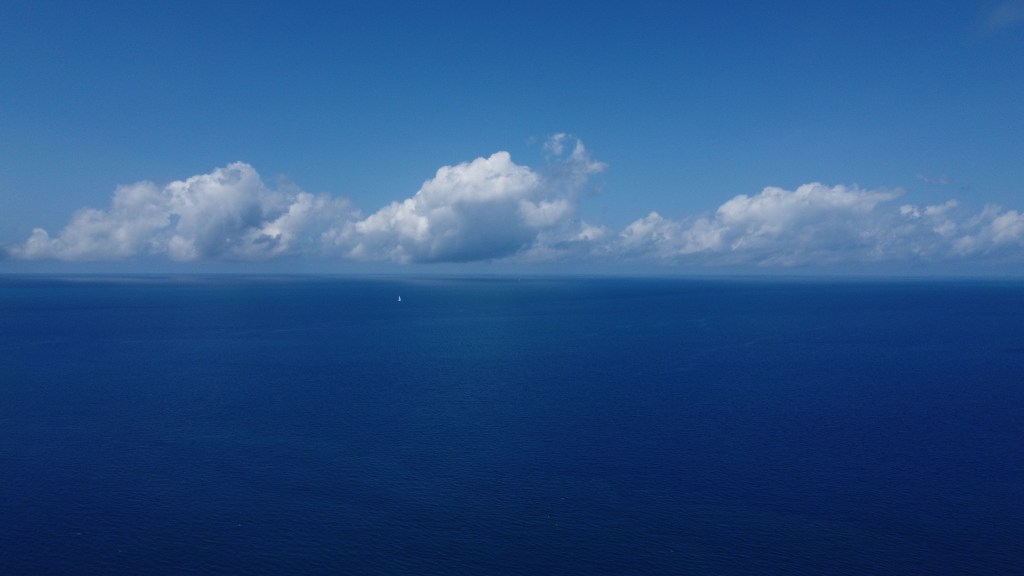
Experience the beauty of the Great Barrier Reef
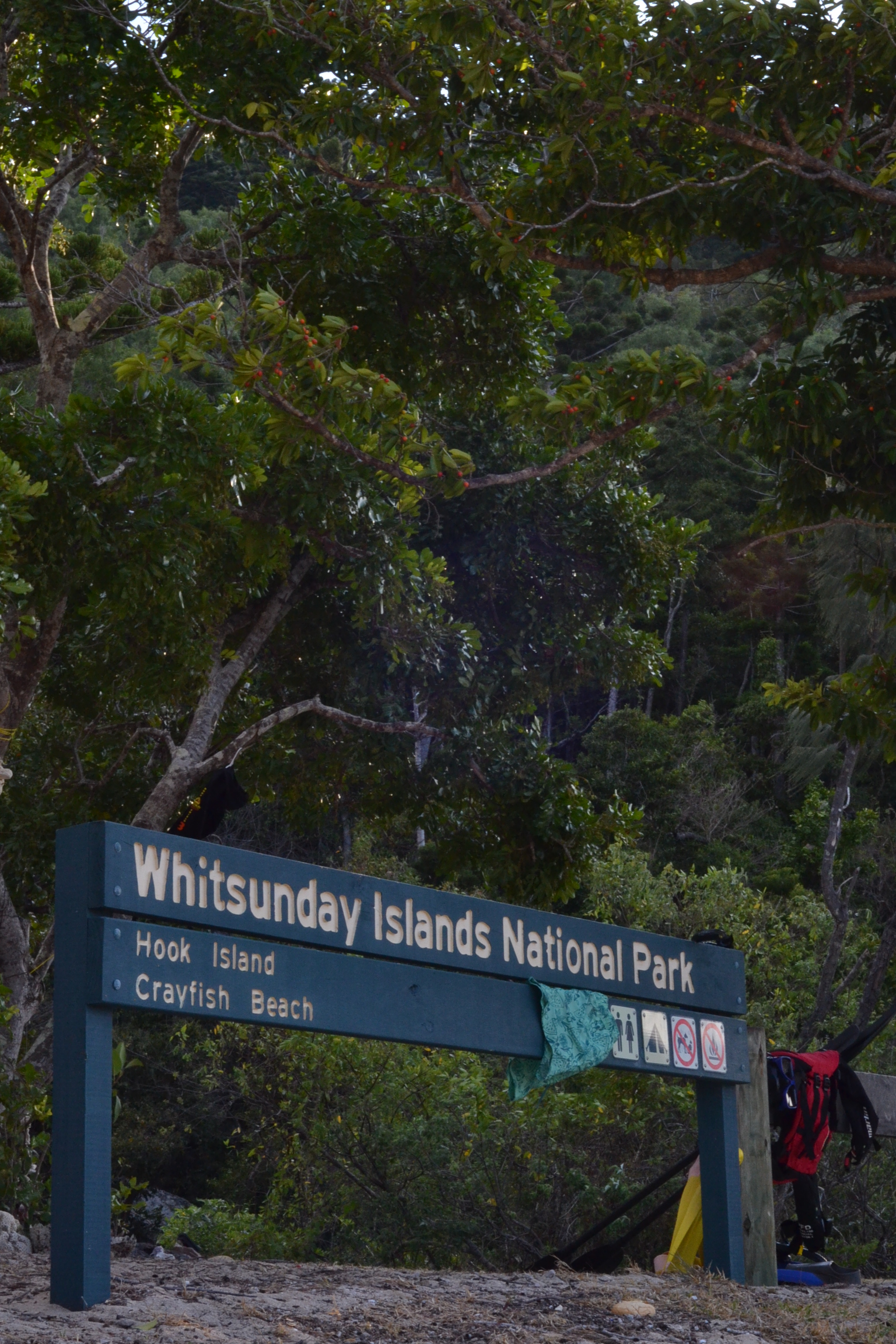
It’s not everyday you get a chance to spend 5 days on an island by yourself. So with a couple of friends we decide to head to Crayfish Bay on Hook island, in the Whitsundays. Nested in the Great Barrier Reef along the Queensland coast and off main land from Airlie Beach, these islands are often associated with the annoying Instagram pictures of people living their “best life” on a white sand beach with turquoise water and amazing never ending palm trees along a row of luxurious hotels, its very life styles of the not so rich and famous.
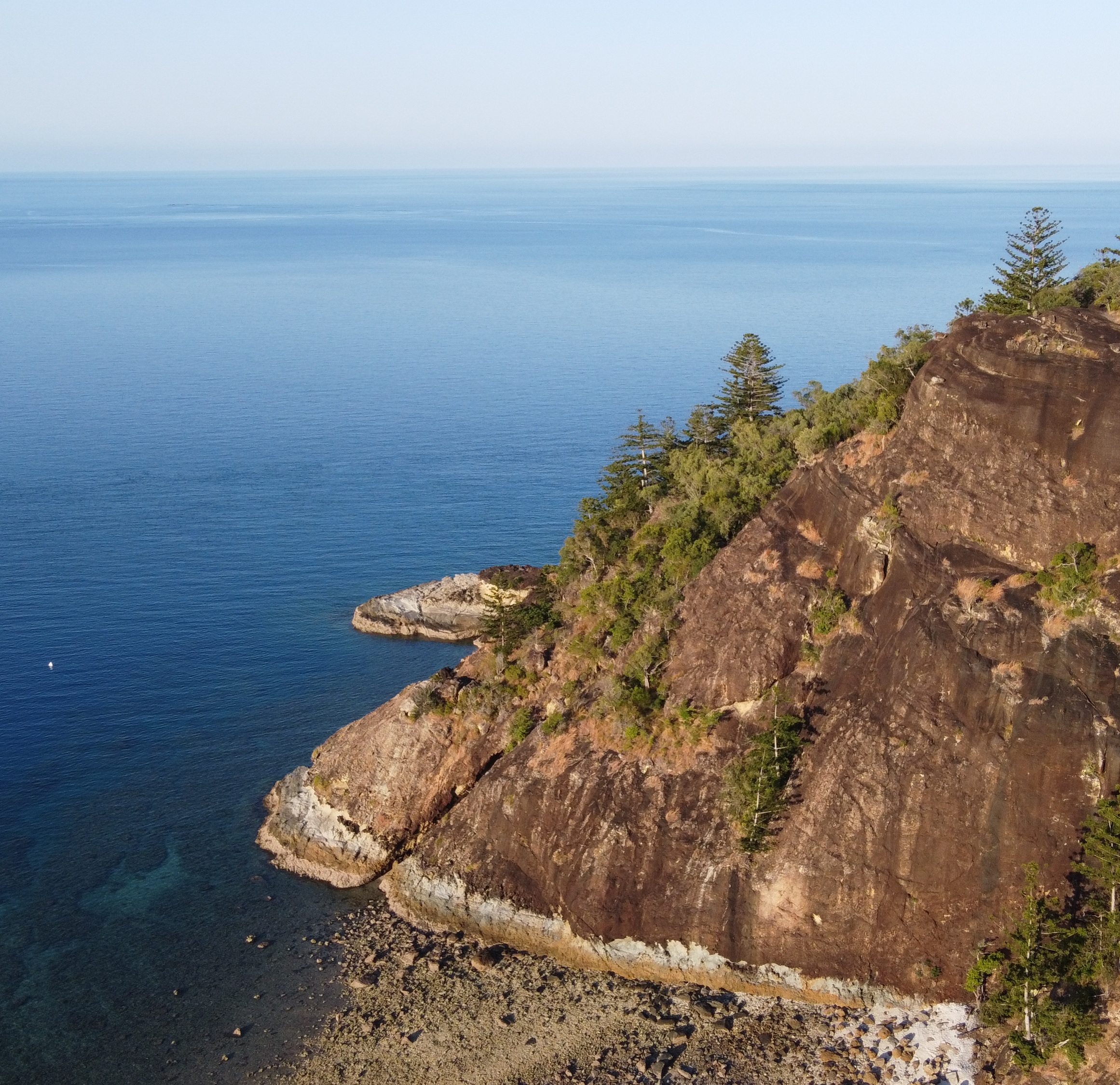
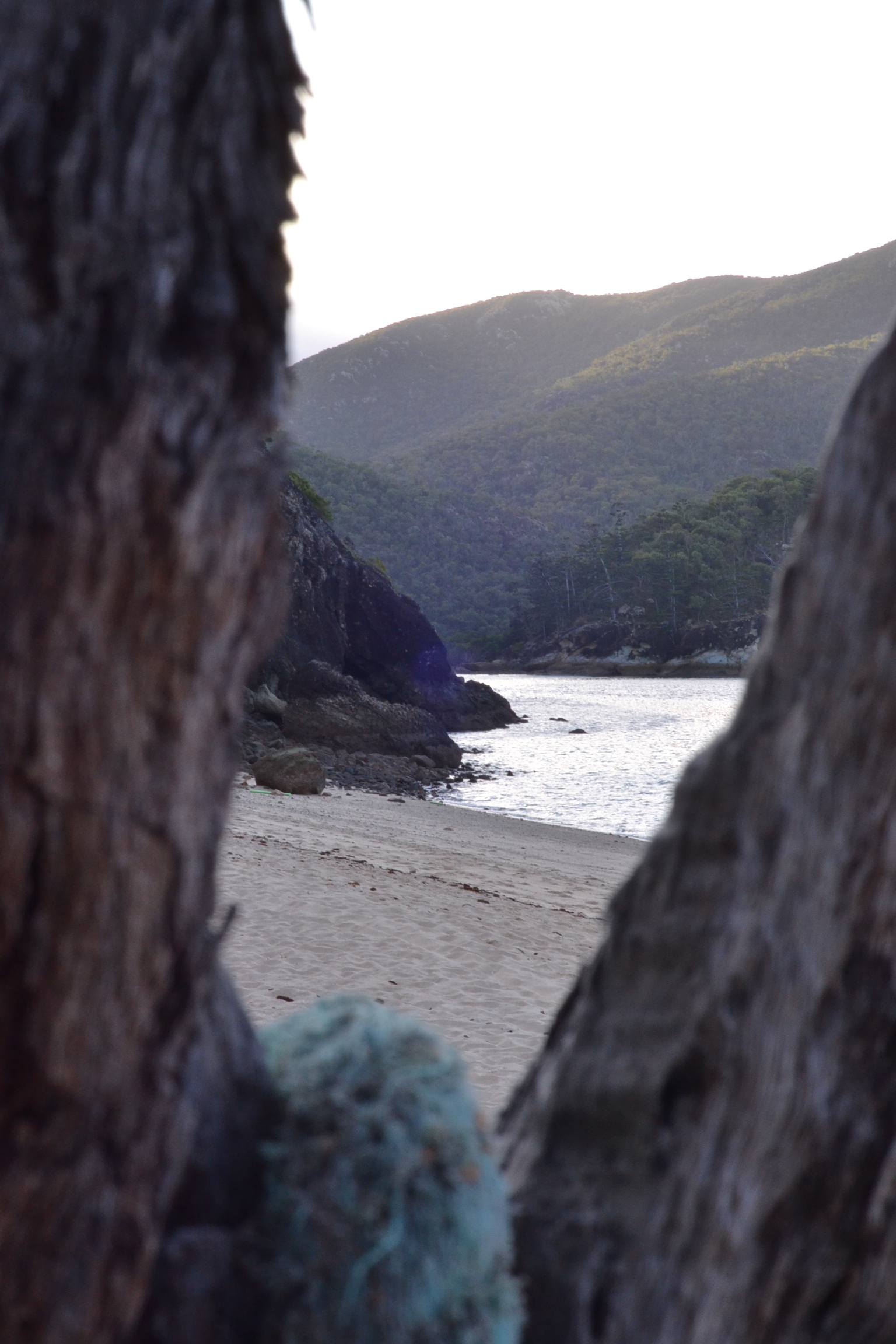
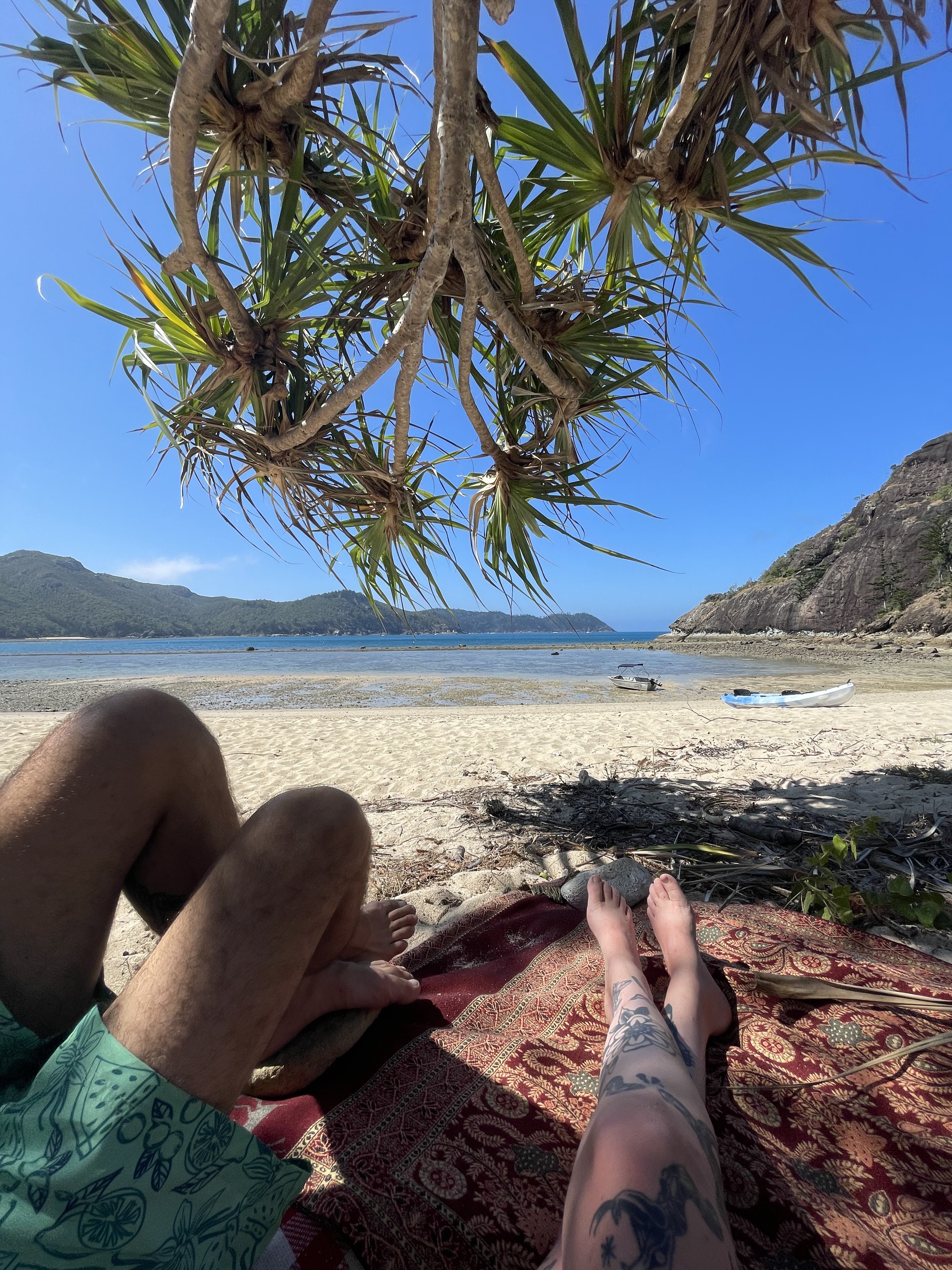
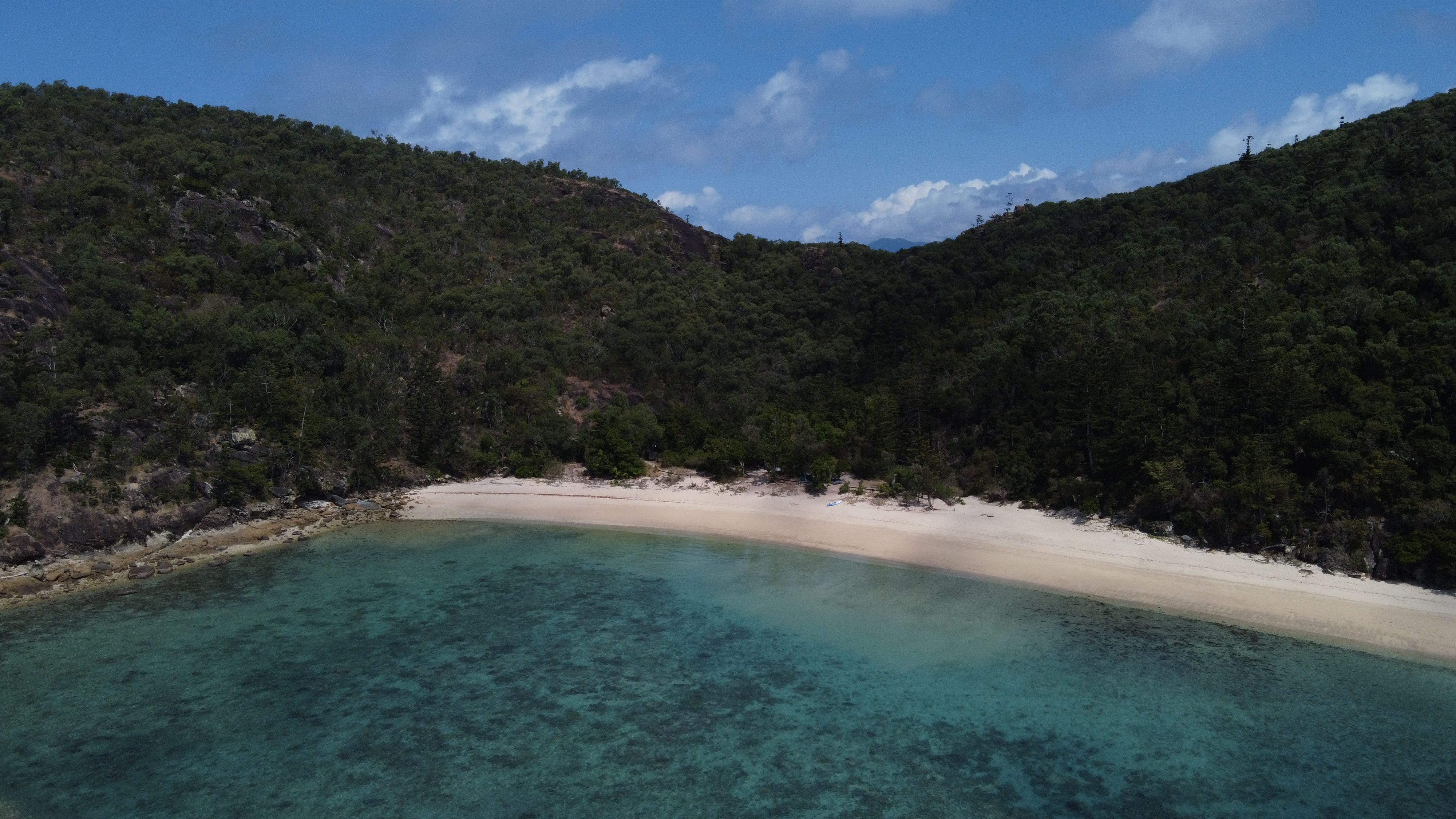
Crayfish bay is just off shore from the hidden and very private campsite in Mackerel Bay South on the uninhabited Hook Island, the expansive fringing reef offers perfect conditions for snorkeling and drift dives. It is a slightly different when you decide to camp on an island like this rather than the hotels that people seem to flock too, our camp was in one of the National Parks that are scatted through out the 74 Whitsunday islands. The camp was the only thing on Hook island and was recommended to us, not to go walking through out the island but to stay in the camp and bay to be safe as getting lost would be tragic on an empty island for the whole week. So, For those few days we would have our very won island and it was perfection. You wake up feeling like your in another world. This absolute serine place was everything we hoped it would be, white sand, perfect crystal waters, palm tress, shells all over the beach and it was all ours. Well apart from having to share it with the islands locals, the Goanna. This “Lace Monitor” as it is called here can grow up to 2meters long and mostly live on the ground and dig holes for nests or burrows to protect eggs from predators. They are very active during the day, and like to spend time basking in the heat of the sun and can adapted to a range of environments and vary in their hunting methods, such as digging, swimming and tree-climbing. But don’t ever fear these amazing creatures, they are harmless to humans unless provoked so leave the be and they will happily partake in a little sun bathing with you.

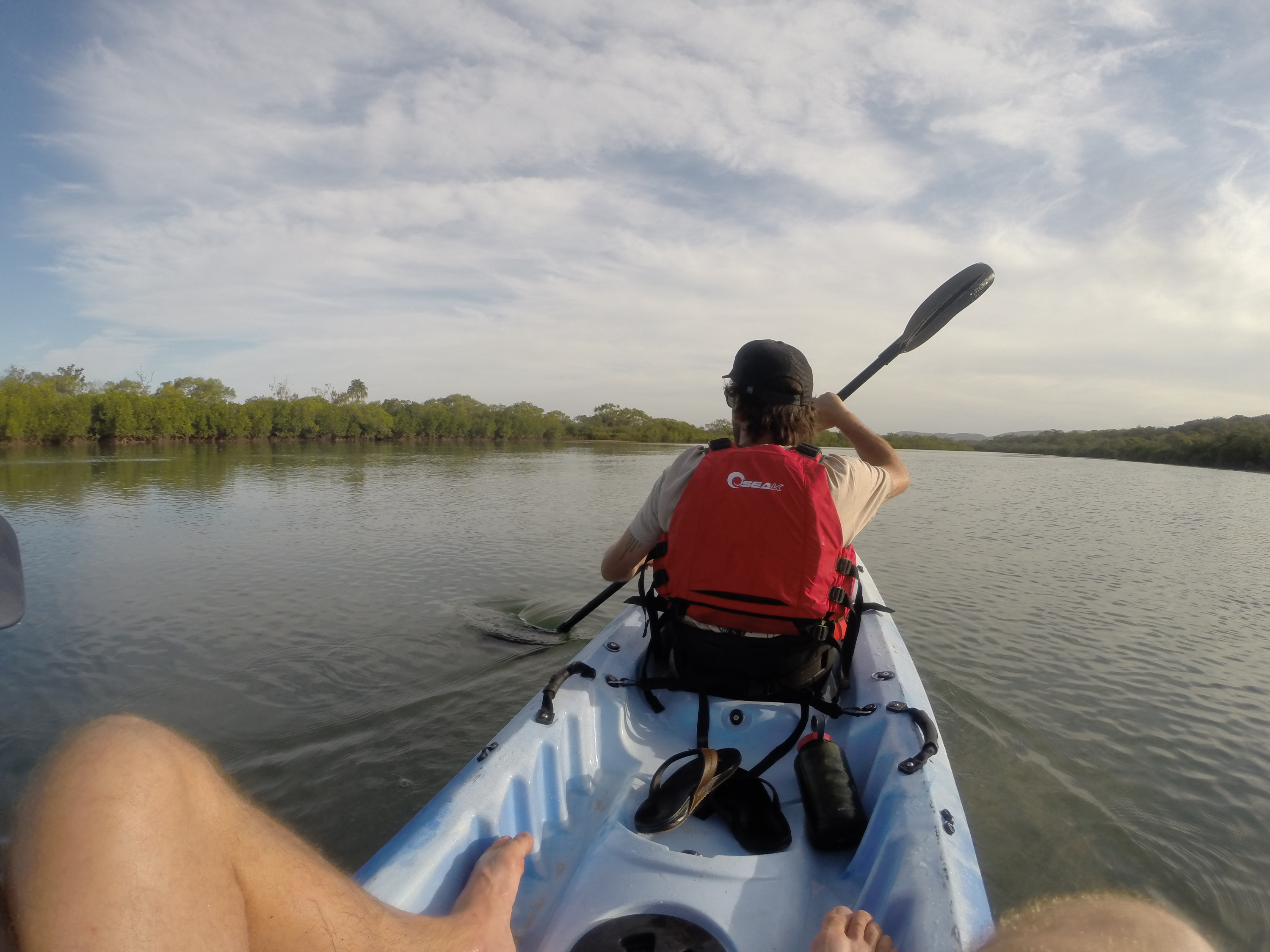
Camps only go up to 10 so get in quick and choose one before they are all booked up. Our group of four got dropped off early in the morning by the local higher ferry with all our gear (2 tents, snorkeling gear, a canoe, food for 5 days, 200 liters of water and of course anything else we could possible carry) and would be collected in 5 days time from the same spot. Arriving we meet a few of the locals who came in on their boat and had been camping there a few days already. We set up camp as quickly as possible and had a quick dip in the ocean, we could finally enjoy a nap on the beach with a little breeze to cool us down. The best thing about the wind is that it keeps the flies away which are rather annoying on Hook island, they are large, stick to you and bite! Remember its Australia, a lot can hurt you.
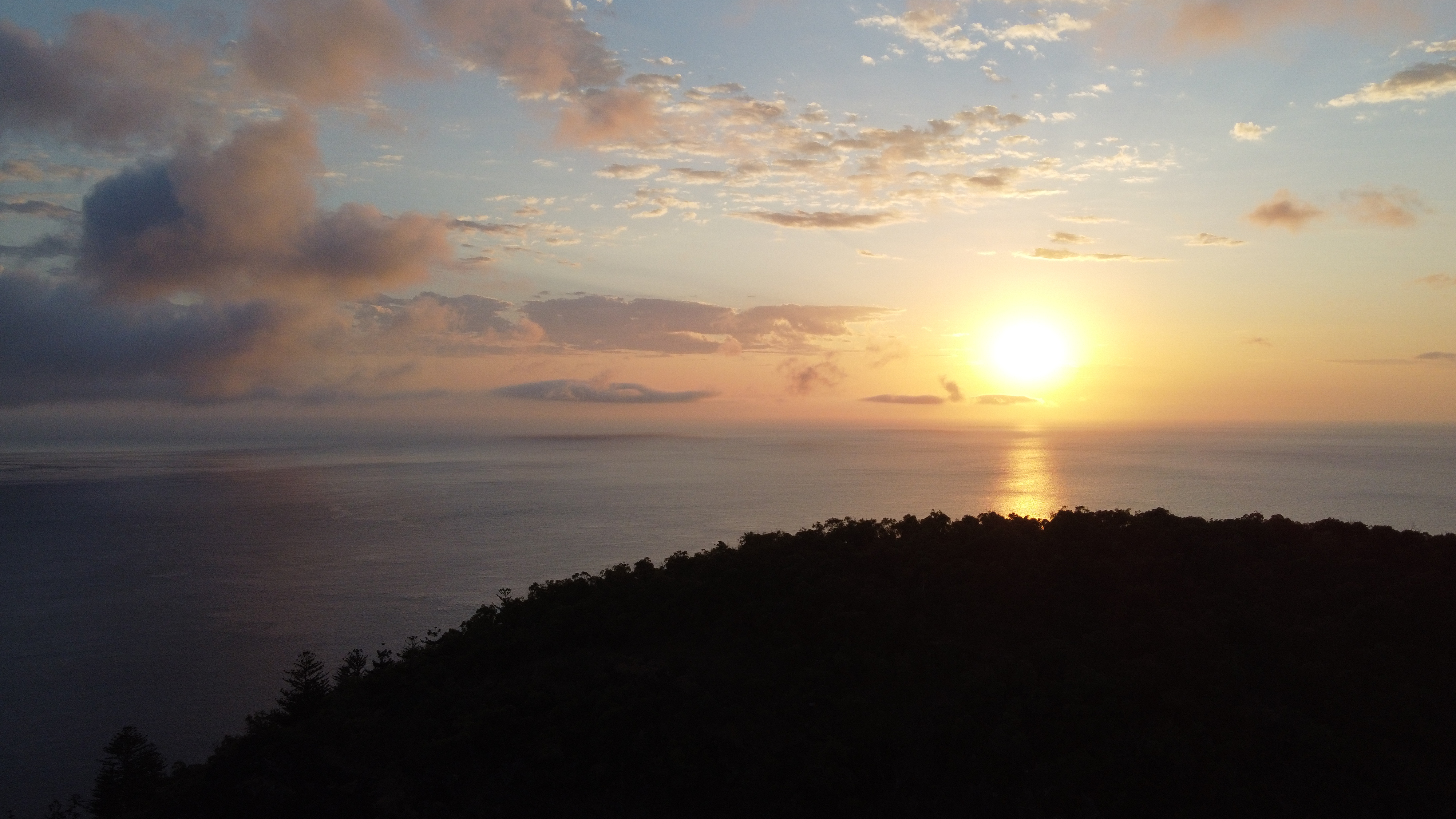
After a windy couple days of trying to keep our tent from blowing away, we finally woke up to a stunning morning with clear steal flat water and bright sunshine making it perfect for a snorkel exploration and a quick drone flight. The day went even better as our noisy neighbors sharing the beach camp with us left that same morning because they were running of booze and supplies. We finally had the island to ourselves!
“Everything can kill you in Australia” is something we have heard many times since moving here and Whitsundays is no exception. Home to some of the deadliest jellyfish on the planet and the occasional shark sighting. But as the ferry operator who dropped us off said when we asked him about sharks, “..you got way more chance to die driving down the Bruce Highway than getting attacked by a shark!” Having been driving on the Bruce highway to get to Airlie Beach and the Whitsundays did not sit well with me but knowing that the sharks weren’t the problem with swimming was fantastic!
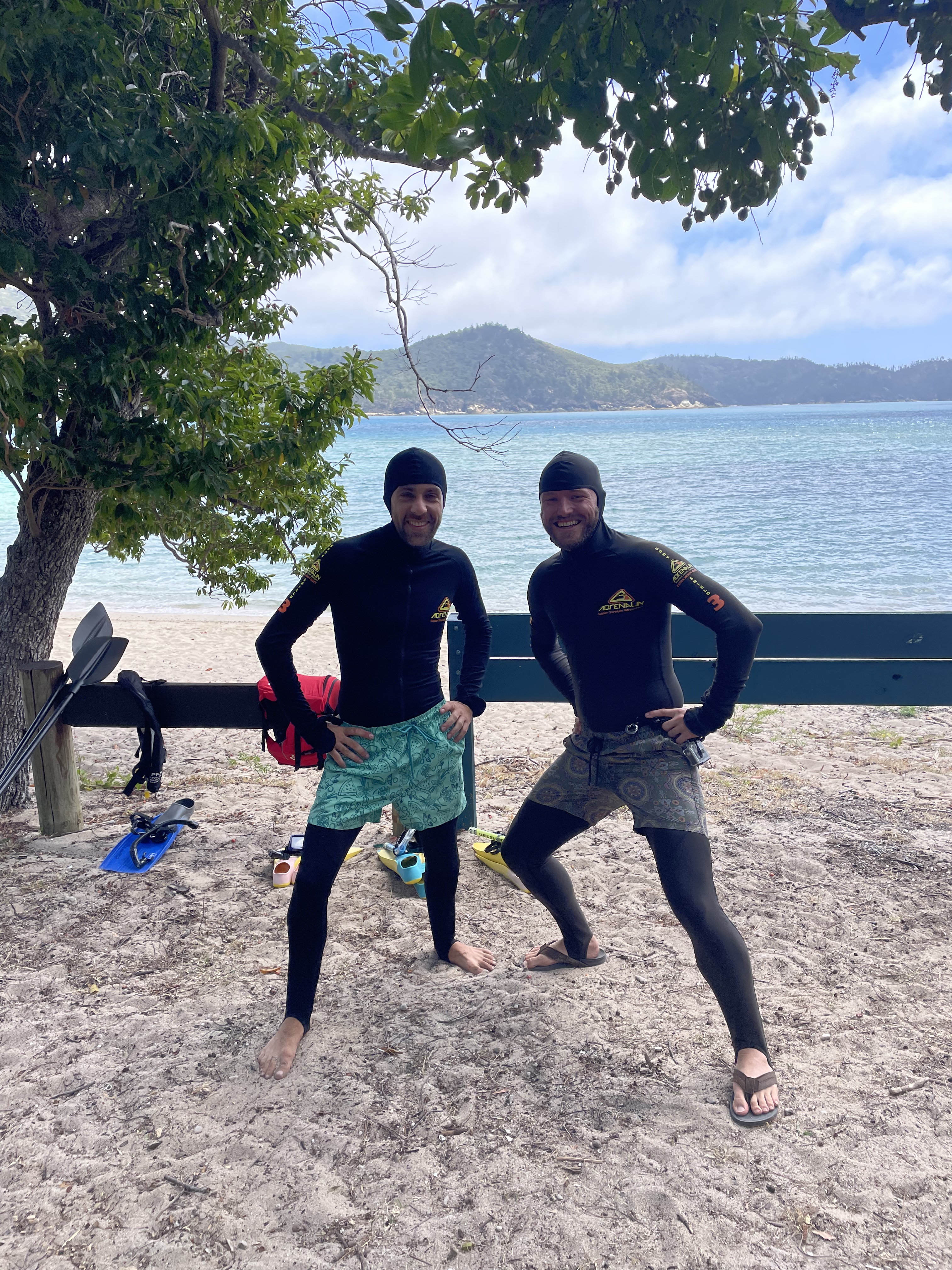
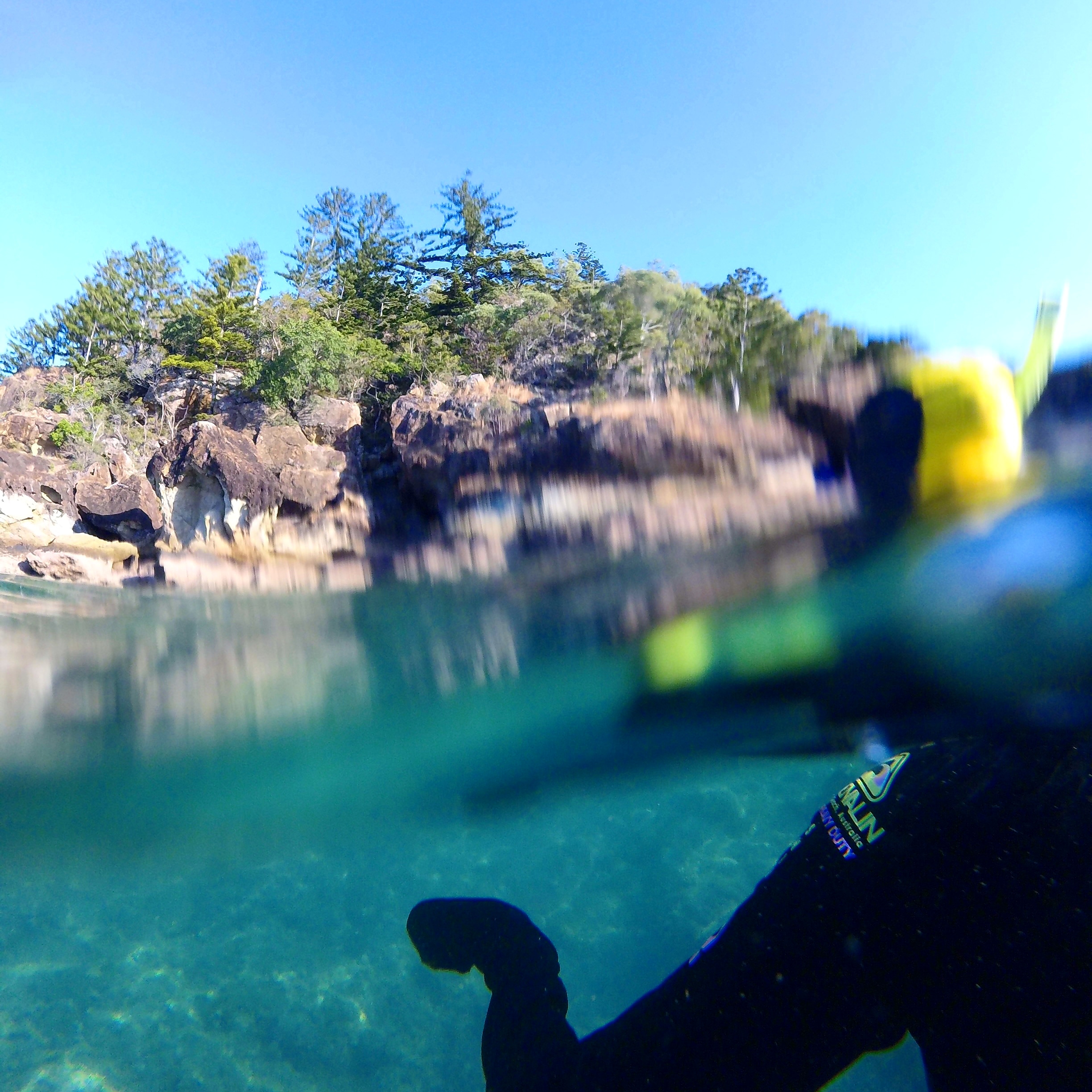
The real issue are the jellies, so small yet so dangerous! Only moving ever so slightly in water and nearly impossible to see these Box Jellyfish are the oceans most deadliest creature but only a few species have been confirmed to be involved with human deaths, some of the species are not deadly to humans at all, regardless their sting is painful and its best to avoid them in the water. In areas like the Whitsundays, where the oceans temperature gets up to 25 degrees or higher, Box Jellies are in the hundreds. Wear a stinger suit (full body lightweight wet suit) or a long swim suit to keep yourself safe, make sure all your major body parts are covered so that if you do come across a jelly, you wont be hurt by their sting. Their 15 long thin tentacles cant get though those suits, their stinging cells are not triggered by touch, but by chemicals found on human skin, which are not present on the suit’s outer surface, so the jellyfish’s stinging reactors don’t fire off. Which makes for safe and comfortable swimming. If you do end up getting stung while swimming in Australia, remember to carry white vinegar with you, Vinegar inactivates the jelly’s reactors in their tentacles so they can’t fire, which means when you go to remove the tentacles you won’t end up with more venom than before. Of course, once you treat with vinegar you still have to remove the stingers with tweezers. Best just avoid them as much as possible and keep your body covered. A sting from one of these jellies can really ruin your experience.
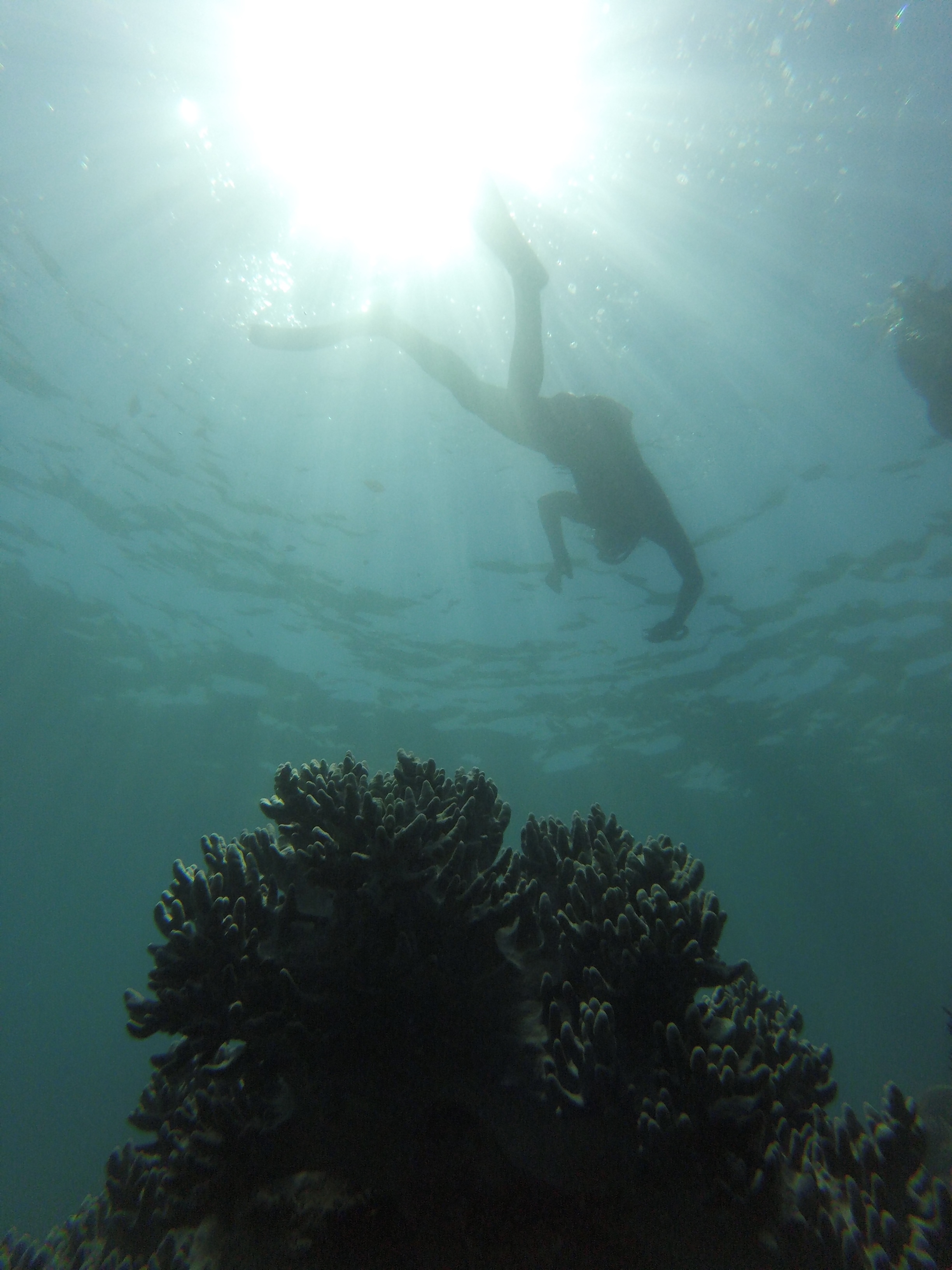
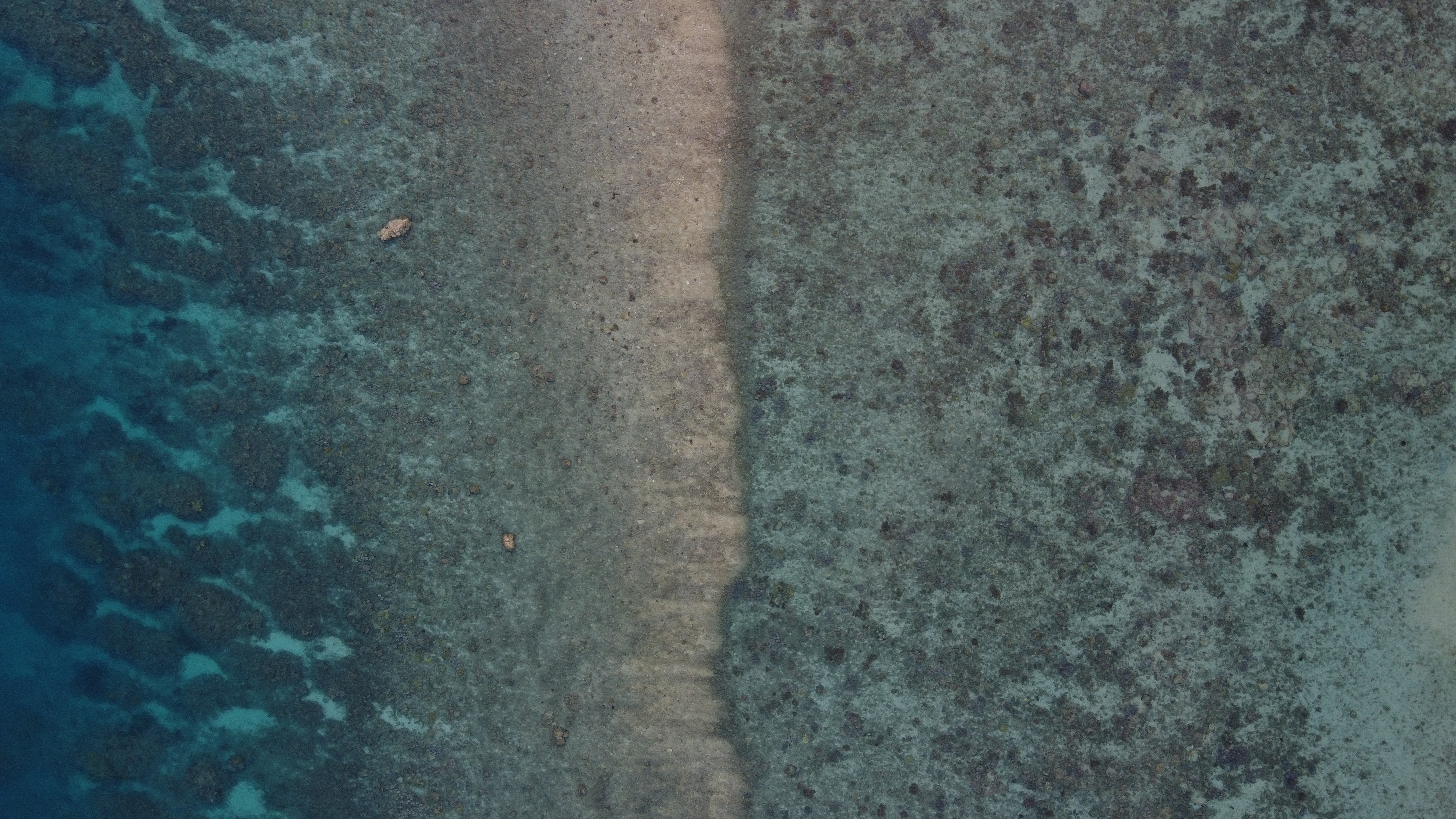
So we jumped in wearing our stinger suits and and tested our goggles. After half an hour of readjusting and checking for leaks we were finally off. With a good visibility we start venturing around the coral reefs that was right in front of our campsite, to realize a lot of them were dead. A quick and brutal reminder of our impact on the perfect yet fragile ecosystems that contribute to the beauty of planet Earth. The tide goes in and out everyday due to water levels changing, to expose the coral to the hot burning sun which over time bleaches it and they sadly die. It is hard to see the coral surface everyday knowing that we had an impact on the reef and there wasn’t anything we could do to protect it now. If you do ever get the chance to go snorkeling please remember to avoid standing on any of the reef, Corals are fragile animals and standing or kicking them will damage or even kill them. Lay your body flat and float on the waters surface to observe them and if you need to stand, find sand or a hard part of the ocean floor to rest on. Sadly tourism is becoming a threat to these beautiful areas as more people flock to them every year and they are at risk.
We had to swim quiet far out to see the remaining of a luxurious coral reef with a diverse wildlife and as we did there was a turtle there to welcome us. He was floating just off shore and swam slowly across the bay, letting us swim along with him. Following the reef we got to the open part of the bay where the drop starts to get a little deeper. The cold streams of the pacific ocean comes to hit you as soon as you dive a little but the corals here are still intact showing some incredible colors and shapes. It feels like you are flying in a magical colourful forest out of a movie or game. The Life around the corals is abundant but the most impressive is probably the giant clams closing suddenly as we swim by. Coming back to the beach we get to encounter a few sting rays enjoying the warmer shallow waters.
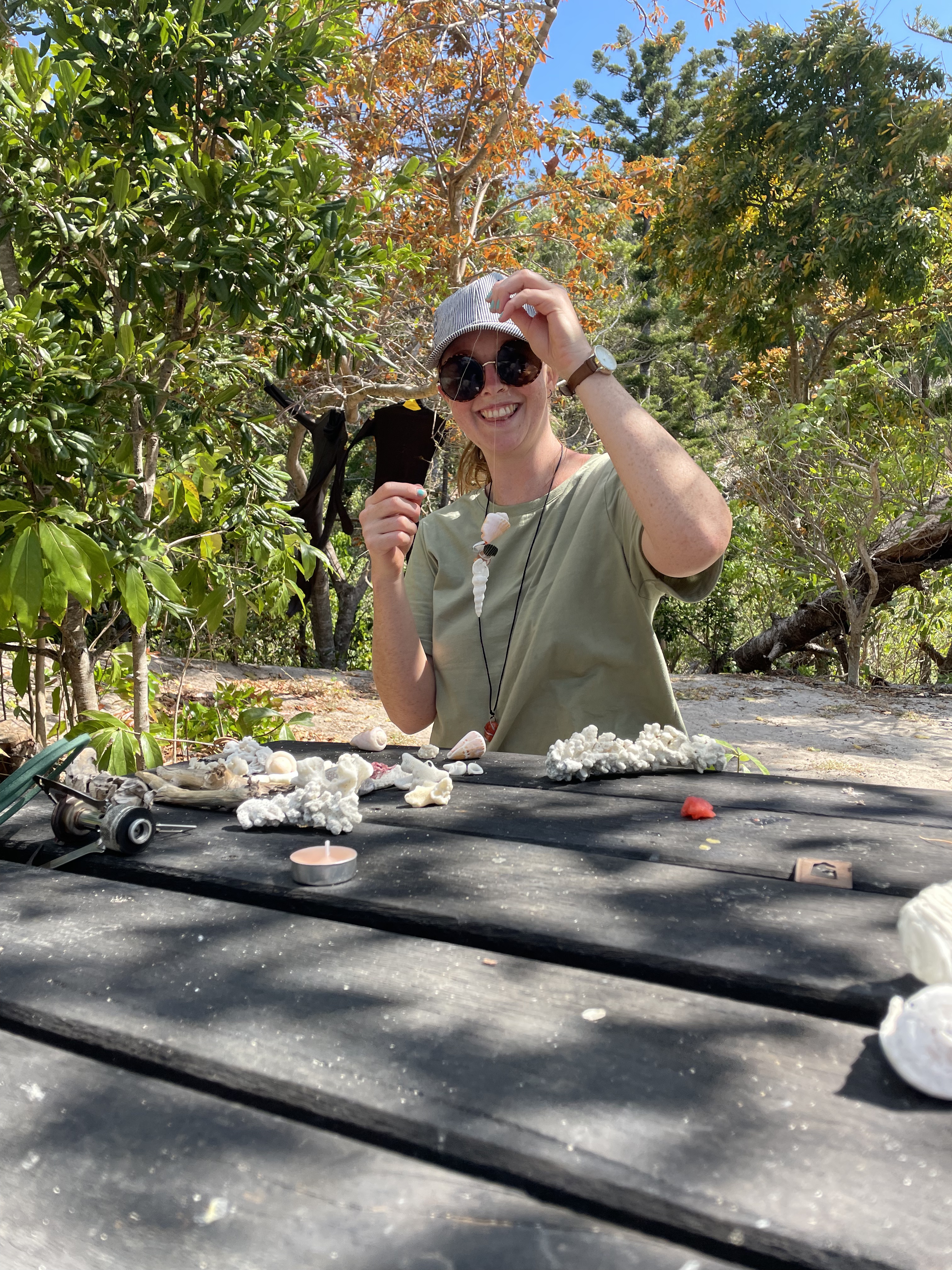
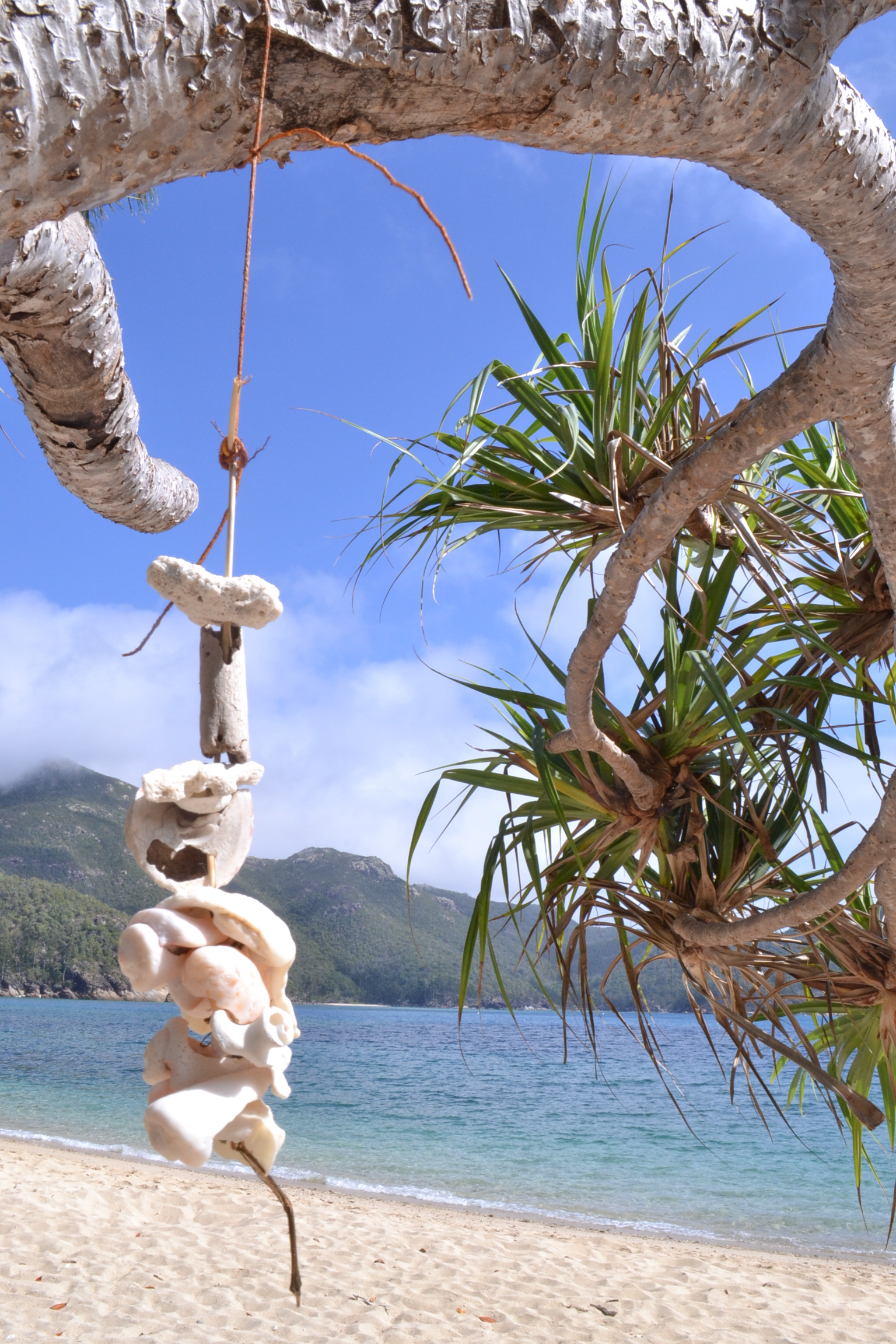
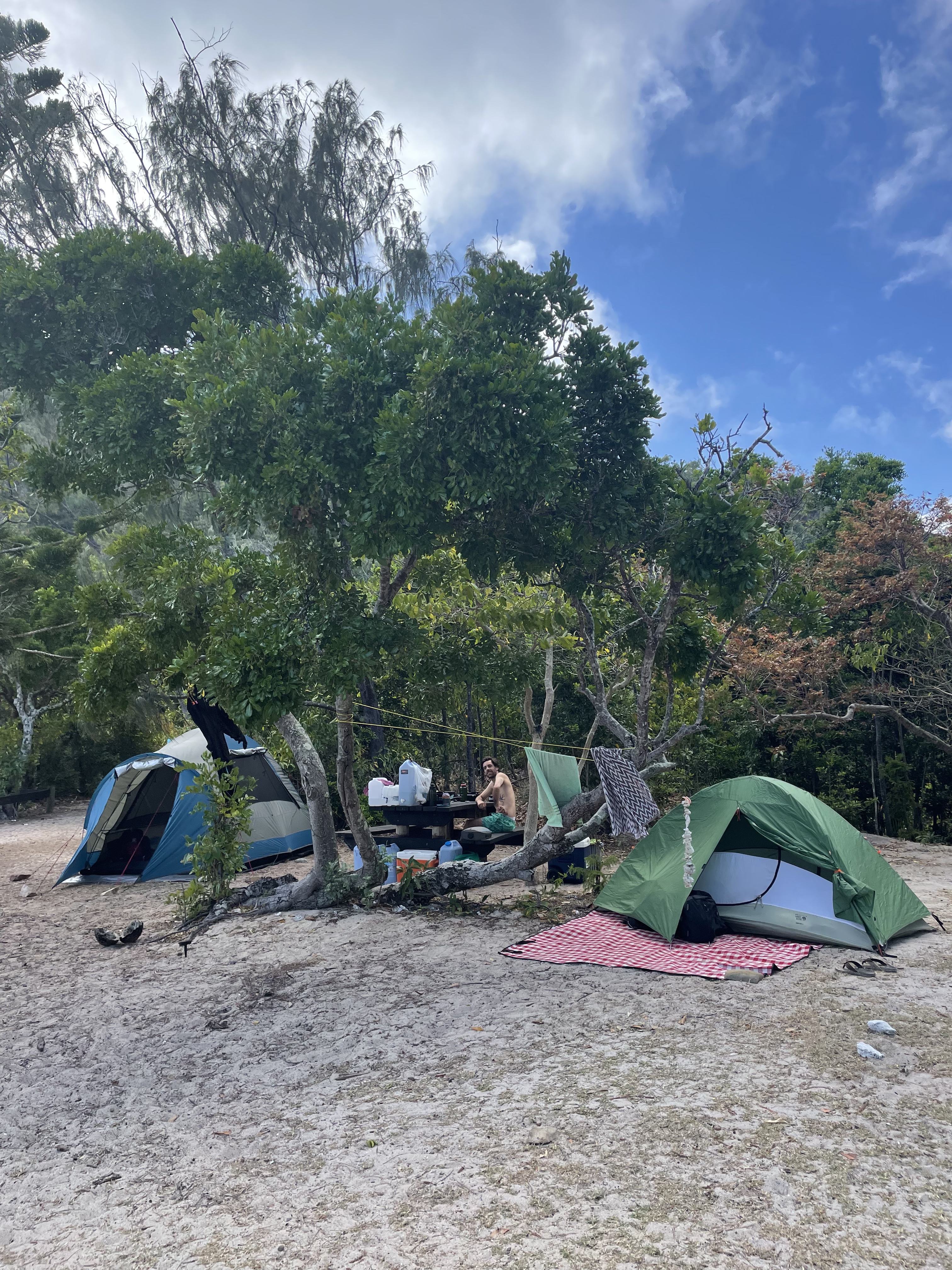
Having our own personal island for 5 days is really a dream come true, having the time to really escape the busy, over populated Queensland coast gives you a chance to reset and think about that you really need. We had no access to internet or phone service while on Hook island so it forced us to really relax ourselves and forget that was happening in the world. Going for 5 days with no power or anyway to keep food cold means you have to rethink the way we eat. A majority of the food that we brought was non perishable foods, meaning not fresh, tinned and easy to store. Breakfast was coffee most mornings with a light snack. Going on to lunch we feasted on our fresh food such as sandwiches, salads and wraps. Dinner was all canned, curries, pastas and rice meals. Water is the thing to think about when you are somewhere that has no access to it. We were a group of 4 and we brought 200 liters, which sounds like a lot but in fact is really necessary in the extremely hot days the Whitsundays have. The water is used for drinking, washing dishes and cooking so you dont want to be running out half way though your trip. If you can, reuse the water for dishes so you don’t use too much of your supply. I know some people will think that’s “so gross” to reuse the dirty water but that’s exactly what you will be if you run out of your supply, dead and “so gross”.
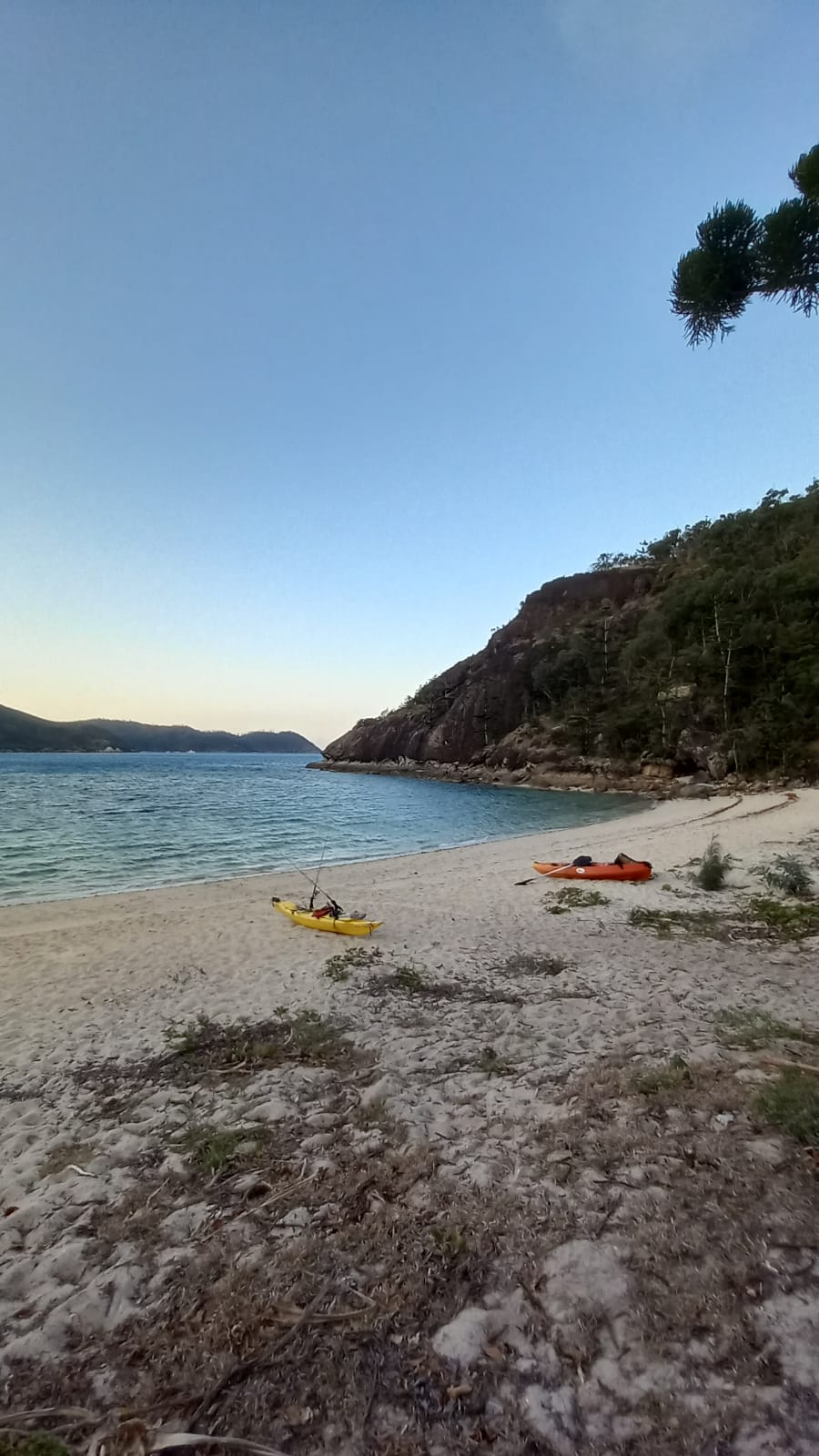
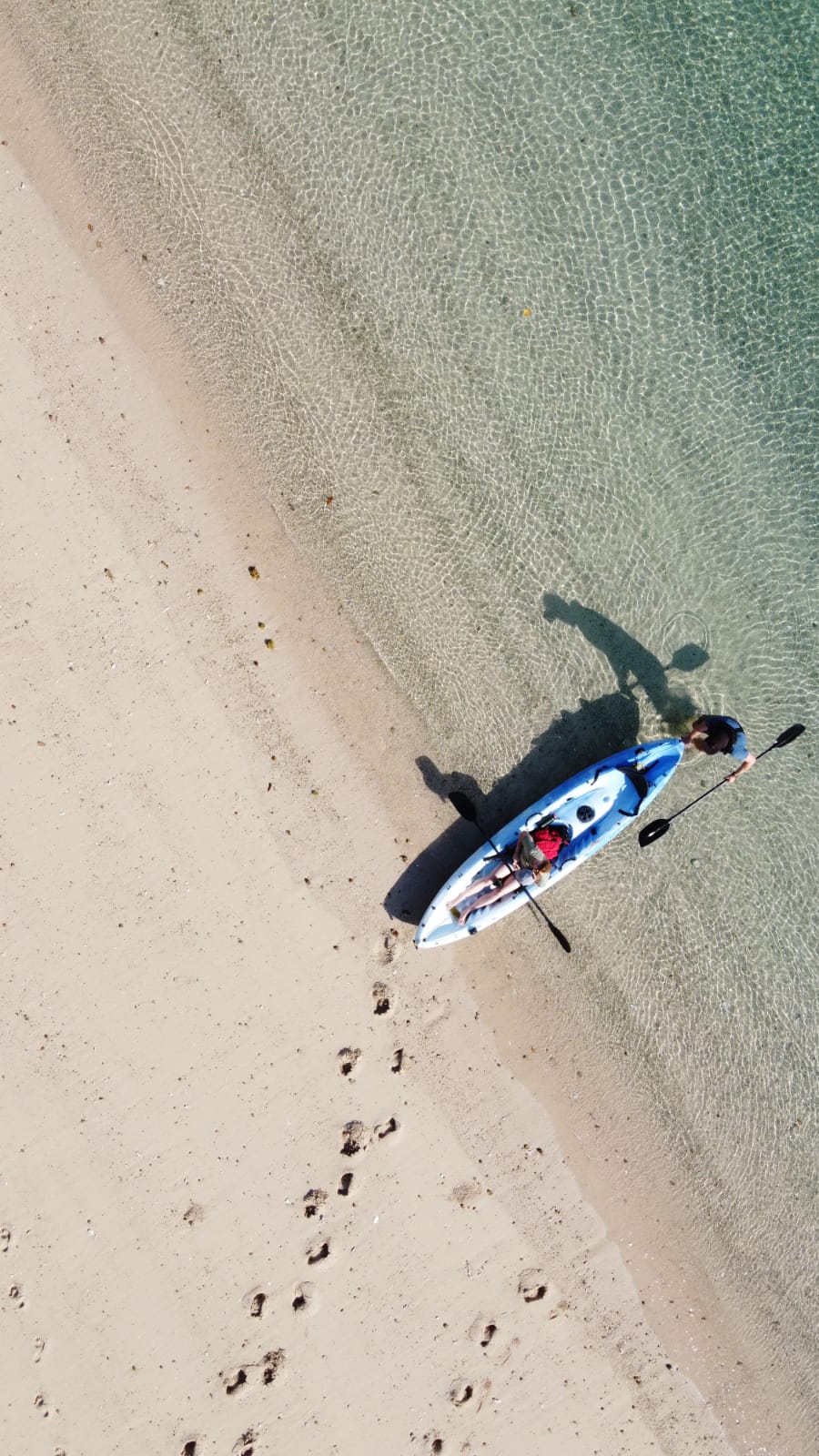
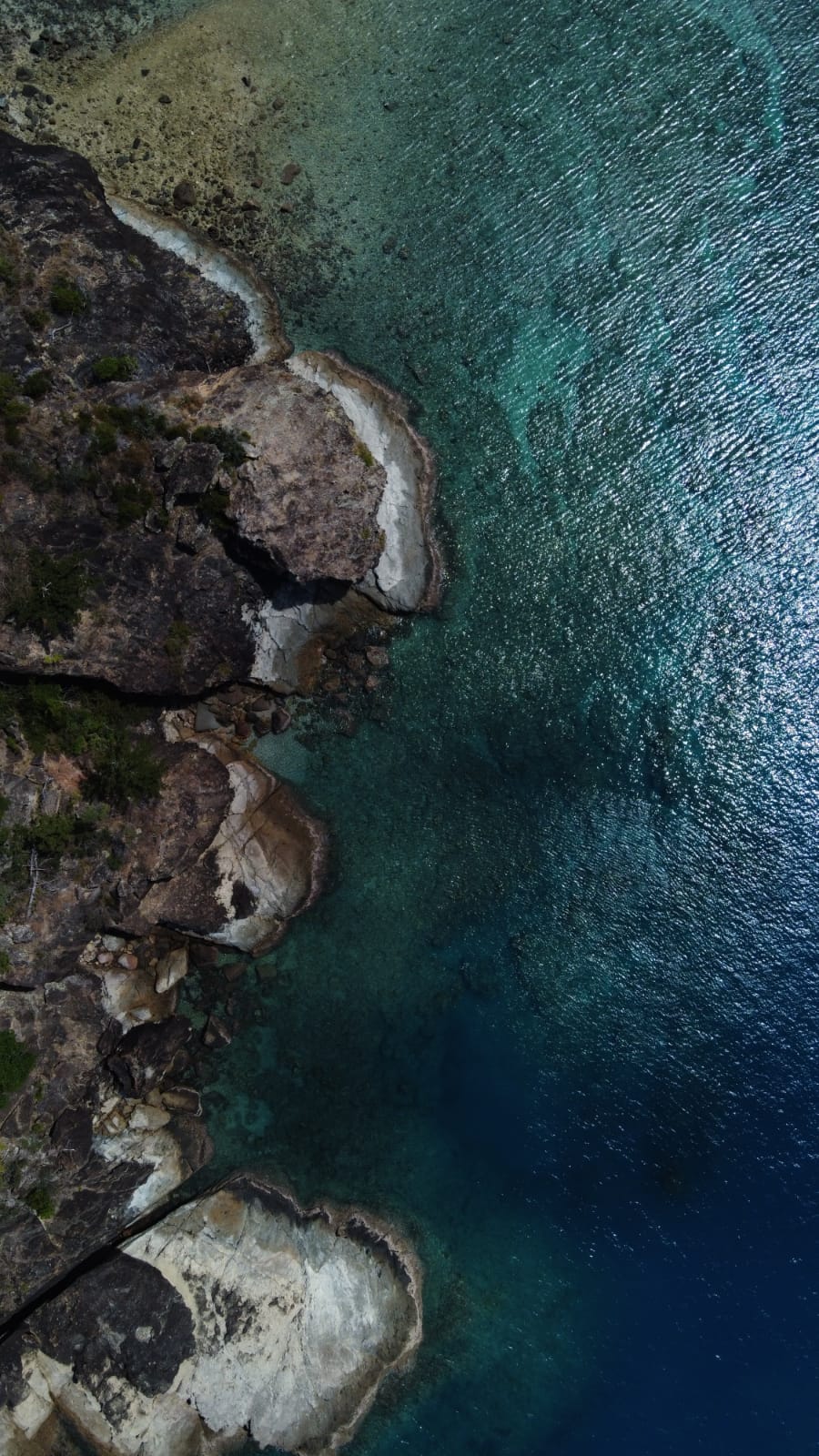
After 5 days we were met by the ferry (only 6 hours late) which definitely made us panic due to the lack of service in the area, the last thing we wanted was to be shipwrecked in real life! On the ferry and heading back to the main land with everything we brought there. Packed our tents, Jerry cans, canoe, personal belongings and every bit of rubbish we could find, whether is was ours or not. Because there is nothing worse than visiting paradise for it to be covered in trash.
All in all, the Whitsunday islands are a magical place where you can really escape the stresses of life and relax on a tropical island. It was hard to say goodbye to our little slice of paradise and we would definitely love to return to Hook island one day. We did this trip on a budget as we were traveling full time and spending a small fortune on hotels wasn’t really what we were wanting to do. But in the end, I think we had the better experience. We were alone and had no one there to bother us on this hidden gem in the Whitsundays.
Our little adventure :
- Crayfish Bay, Hook island – Whitsunday Islands QLD
- Scamper – Whitsunday island camping transfers (ferry)
Forever Traveling, Chris & Claire.
 Greetings from
Leave a comment